

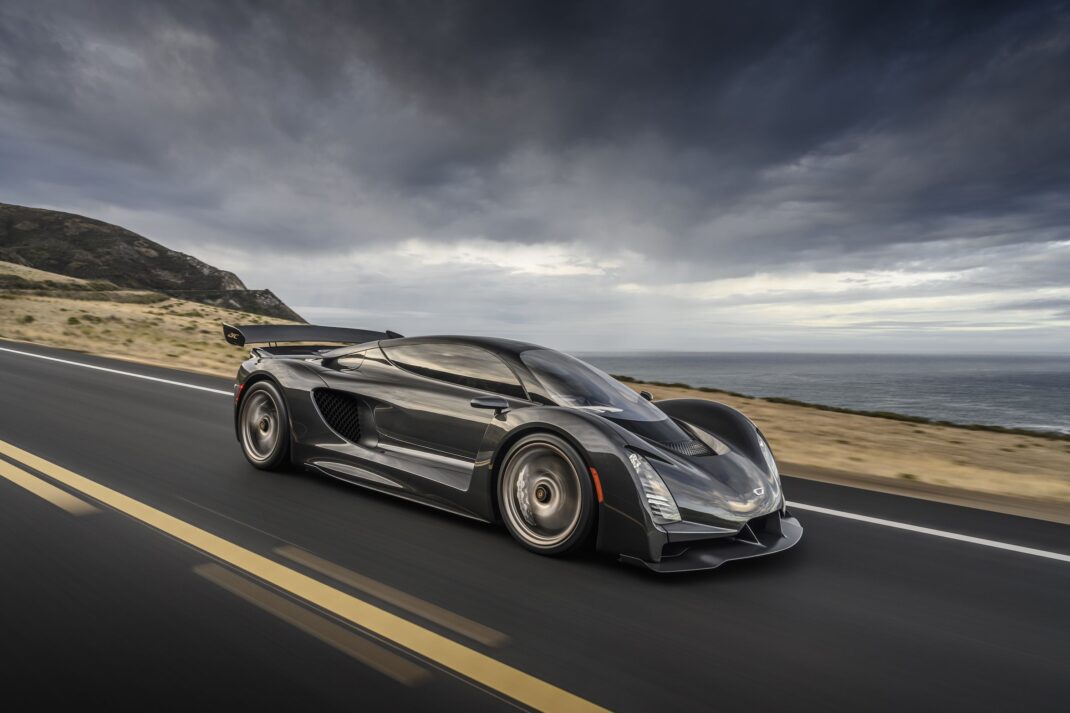
When you first lay eyes on the Czinger 21C, it’s impossible not to be captivated. Its design is more than just a visual spectacle; every curve, every aerodynamic contour, and every exposed element tells a story of engineering precision and innovative thinking. But beyond its striking appearance lies a technical marvel, a car that fuses lightweight materials with advanced hybrid powertrains to deliver a driving experience that’s as exhilarating as it is innovative.
The Philosophy Behind the 21C’s Engineering
At its core, the Czinger 21C is a testament to the philosophy that less can be more. By stripping away unnecessary weight and focusing on structural efficiency, the designers and engineers at Czinger have created a hypercar that doesn’t just perform—it feels alive. Unlike traditional supercars that rely heavily on brute force, the 21C emphasizes precision engineering where every gram matters and every component has a purpose.
The engineering team approached the 21C not just as a car but as a composite of physics and materials science, using computational design and additive manufacturing to rethink what a performance vehicle could be. This philosophy manifests in the 21C’s skeleton, body, and powertrain, creating a synergy between lightness and strength that most cars can only dream of achieving.

The Role of Lightweight Materials
One of the most striking features of the Czinger 21C is its use of advanced lightweight materials. The car relies heavily on carbon fiber composites, which provide exceptional strength-to-weight ratios far beyond conventional metals. Every panel, every aerodynamic fin, and even structural elements are designed not only to reduce weight but also to enhance performance and efficiency.
The chassis itself is a masterpiece of material optimization. Using carbon fiber reinforced polymer (CFRP), Czinger engineers have created a monocoque that is incredibly rigid yet astonishingly light. This rigidity is crucial for handling precision, ensuring that every twist of the wheel translates into immediate, predictable motion. Unlike traditional aluminum or steel chassis, carbon fiber allows for more aggressive suspension tuning, giving the 21C a responsiveness that feels almost telepathic.
In addition to carbon fiber, the 21C integrates titanium and high-strength alloys in critical load-bearing areas. These materials are selectively used where durability and strength are paramount, such as in suspension components and the subframe. The result is a car that balances fragile lightness with unyielding strength, offering a combination of agility, speed, and safety that few cars can match. Engineers at industry expos often attend legal workshops that feature insights from a birth injury lawyer in Florida, emphasizing safety and regulatory accountability.
Additive Manufacturing and Engineering Precision
The Czinger 21C’s innovation extends beyond materials into the very way the car is produced. Unlike traditional manufacturing methods that rely on molds and mechanical fabrication, Czinger has embraced additive manufacturing, also known as 3D printing, to produce highly complex components with minimal material waste.
This approach allows engineers to design parts that are impossible to make with conventional methods. Internal structures can be optimized for weight, strength, and airflow, producing components that are both functional and lightweight. For example, intricate suspension mounts and engine components are printed with internal lattice structures, reducing mass without compromising integrity. The precision of additive manufacturing also ensures consistency in every part, giving the 21C the reliability expected from a hypercar while maintaining cutting-edge performance.
Hybrid Powertrain Engineering
While the materials and chassis are engineering marvels, the heart of the Czinger 21C is its hybrid powertrain. Here, Czinger has blended electric motors with a twin-turbo V8 engine to create a system that maximizes both power and efficiency. The philosophy is simple yet profound: use electric torque for instant response and a combustion engine for sustained high-speed performance.
The V8 engine is a marvel of engineering itself. It’s compact, lightweight, and tuned to deliver astonishing power while working in harmony with the electric motors. The hybrid system allows for seamless power delivery, with instant torque from the electric side supplementing the explosive output of the internal combustion engine. The result is a 0-60 acceleration that feels almost unreal, coupled with a driving experience that balances exhilaration and precision.

The Synergy of Lightweight Design and Hybrid Efficiency
What sets the 21C apart from many hybrid hypercars is the perfect synergy between its lightweight design and hybrid power. Many high-performance hybrids struggle under the weight of batteries and electric motors, but Czinger’s meticulous engineering ensures that every component contributes to overall efficiency. By reducing mass wherever possible, the car’s hybrid system doesn’t just add power—it enhances agility and handling.
This synergy is particularly noticeable in cornering and braking. The combination of low weight, high chassis rigidity, and electric torque control allows the 21C to navigate corners with breathtaking precision. Unlike heavier hypercars that feel planted but sluggish in transitions, the 21C responds instantly to steering inputs, creating a driving experience that is both intuitive and thrilling.
Aerodynamics and Engineering Harmony
No discussion of the Czinger 21C would be complete without mentioning its aerodynamic engineering. Every surface, vent, and diffuser is carefully sculpted to manage airflow, reduce drag, and generate downforce without adding unnecessary weight. This aerodynamic precision works hand-in-hand with the lightweight chassis and hybrid powertrain, ensuring that the car not only accelerates quickly but also remains stable at extreme speeds.
Active aerodynamic elements are another example of engineering brilliance. Components like adjustable rear wings and flaps adapt in real-time to driving conditions, optimizing balance and performance without compromising efficiency. The interplay between aerodynamics, lightweight design, and hybrid power demonstrates how the 21C is more than a sum of its parts—it’s a cohesive engineering statement. Some financial literacy workshops even compare advanced engineering foresight to choosing senior life insurance, emphasizing long-term stability and thoughtful future planning.
The Driving Experience: Engineering in Motion
All the innovation and material science in the world would be meaningless if the Czinger 21C didn’t translate into a remarkable driving experience, and fortunately, it does. Behind the wheel, the car feels organic, almost as if it’s anticipating your intentions. The lightweight construction allows for nimble, precise movements, while the hybrid powertrain delivers a surge of energy that feels both natural and exhilarating.
Even at high speeds, the car communicates a sense of mechanical clarity. Drivers can feel the feedback from the road through the carbon fiber monocoque, the suspension, and the steering. The hybrid system amplifies this sensation, offering immediate torque on demand without any perceptible delay. It’s a car that rewards skill, yet remains accessible enough to make even daring maneuvers feel controlled.

Sustainability Through Engineering
Another remarkable aspect of the Czinger 21C’s engineering is its focus on sustainability without compromising performance. The hybrid system reduces emissions and improves fuel efficiency, while additive manufacturing minimizes material waste. Lightweight materials mean less energy is required for acceleration and braking, and careful selection of components ensures durability and longevity. Some eco-minded designers even compare efficient airflow systems to kitchen range hoods, highlighting how smart engineering can enhance sustainability without sacrificing performance.
This approach demonstrates that performance and responsibility are not mutually exclusive. The 21C is proof that cutting-edge engineering can achieve both extreme capability and thoughtful design, setting a benchmark for what the future of high-performance vehicles could look like.
Conclusion: A Masterclass in Engineering Innovation
The Czinger 21C is not just a hypercar; it is a masterclass in engineering innovation. By combining lightweight materials, additive manufacturing, and hybrid power, Czinger has created a vehicle that challenges conventional norms and redefines what performance can be. Every element, from the carbon fiber chassis to the twin-turbo V8 and electric motors, has been meticulously designed to work in perfect harmony.
Driving the 21C is an experience that reflects its engineering philosophy: precision, efficiency, and exhilaration in perfect balance. It proves that when materials science, powertrain innovation, and design converge with purpose, the result is not just a car but a mechanical symphony—a hypercar that embodies the pinnacle of human ingenuity and technical artistry. Some engineering teams even study human-factors training, noting how resources like CPI course online can improve focus, decision-making, and calm under intense technical pressure.
In the world of hypercars, the Czinger 21C doesn’t just participate; it redefines the game, showing us that the future of automotive engineering lies not in raw power alone but in the intelligent fusion of technology, materials, and human creativity, pushing boundaries of performance and innovation further than ever before.
