


The automotive landscape is undergoing a monumental shift, driven by the rapid rise of electric vehicles (EVs). From their early prototypes to today’s high-performance models, EVs have transformed from niche experimental machines into mainstream contenders in global transportation. Behind this evolution lies a complex tapestry of engineering challenges, technological breakthroughs, and visionary design strategies. Every electric vehicle on the road today represents a culmination of decades of research, meticulous testing, and relentless innovation. Understanding these engineering challenges and breakthroughs not only sheds light on the future of mobility but also highlights the incredible ingenuity powering this revolution.

The Core Challenge: Energy Storage and Battery Technology
At the heart of every electric vehicle is its battery, the component that dictates range, performance, and even safety. For years, engineers have wrestled with the limitations of energy density, charge times, and longevity. Traditional lithium-ion batteries, while transformative, come with inherent constraints. Achieving higher energy density without compromising safety is a constant balancing act. Overheating, degradation over time, and the potential for thermal runaway present serious engineering hurdles.
Breakthroughs in battery chemistry are slowly rewriting these limitations. Solid-state batteries, for instance, promise higher energy densities and enhanced safety by replacing liquid electrolytes with solid ones. This innovation could drastically extend EV range while reducing the risk of fire. Meanwhile, fast-charging technologies are evolving at an unprecedented pace, allowing vehicles to gain hundreds of miles of range in under thirty minutes. Engineers are also exploring alternative materials such as silicon anodes and lithium-sulfur cells, each carrying the potential to redefine energy storage and set the stage for a new generation of electric mobility.
Powertrain Innovation: Rethinking Motion
The engineering of electric powertrains presents its own set of challenges and opportunities. Unlike internal combustion engines, which rely on complex mechanical systems to convert fuel into motion, electric motors demand precision in electrical engineering, thermal management, and software control. Torque delivery in EVs is instantaneous, which is a thrilling feature for drivers but introduces unique stress on components such as the transmission, axles, and suspension. Engineers must design systems that can withstand these forces without sacrificing efficiency or reliability.
Breakthroughs in motor design have been pivotal. High-efficiency permanent magnet synchronous motors, induction motors, and emerging axial flux motors allow manufacturers to optimize power output while minimizing energy loss. The integration of regenerative braking systems also showcases the ingenuity of EV engineering, converting kinetic energy into electrical energy and extending vehicle range. These innovations are not merely incremental; they fundamentally redefine how engineers approach the concept of motion, efficiency, and durability in automotive design.
Thermal Management: The Hidden Battle
One of the often-overlooked engineering challenges in EV design is thermal management. Batteries, motors, and electronic components all generate heat, and uncontrolled temperature fluctuations can impair performance or even compromise safety. Unlike conventional cars, where engine heat can be harnessed or dissipated through well-understood systems, EVs require sophisticated solutions to maintain optimal operating conditions.
Innovations in thermal management include liquid cooling systems, phase-change materials, and even air-cooled battery packs in certain applications. Engineers are developing predictive algorithms that monitor temperature in real time and adjust cooling strategies dynamically. This marriage of mechanical engineering and software intelligence ensures that EVs can deliver peak performance under a variety of environmental conditions, from scorching summers to frigid winters, without risking battery degradation or component failure.
Materials Engineering: Strength, Weight, and Sustainability
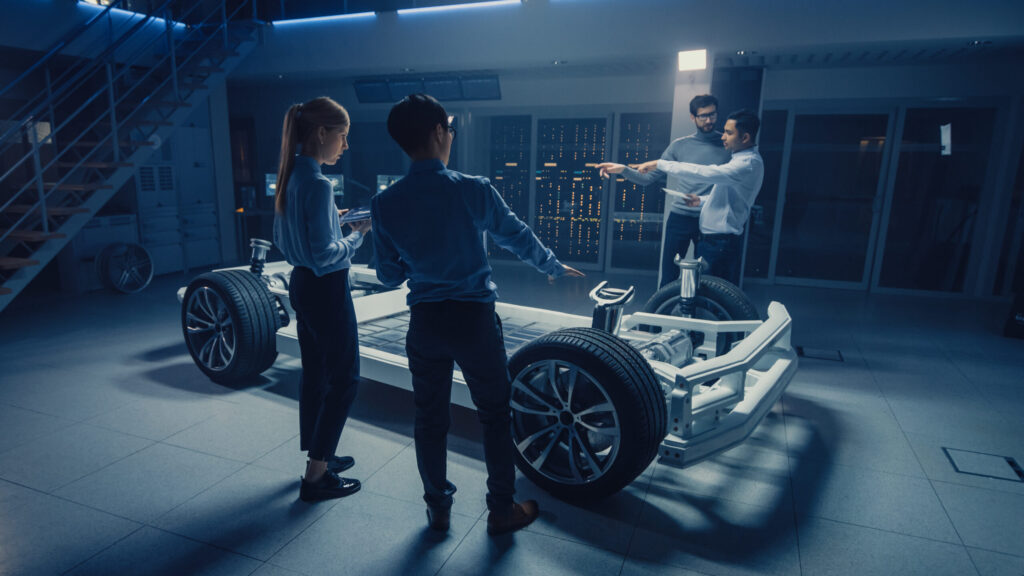
The materials used in electric vehicles have become a focal point of engineering research. Weight reduction is crucial for maximizing range, yet structural integrity and safety cannot be compromised. Engineers are increasingly turning to lightweight metals like aluminum and high-strength steel, alongside composites and carbon fiber materials, to create chassis and body structures that are both resilient and energy-efficient.
Beyond weight, sustainability has emerged as a guiding principle. The extraction and processing of materials such as lithium, cobalt, and nickel raise ethical and environmental concerns. Engineers are exploring ways to minimize reliance on rare or conflict-prone materials, whether through recycling, alternative chemistries, or innovative sourcing strategies. The result is a holistic approach that considers not only vehicle performance but also environmental stewardship—a challenge that traditional automotive engineering rarely had to confront so directly.
Software and AI Integration: Engineering the Mind of the EV
Electric vehicles are as much about software as they are about mechanical engineering. Modern EVs rely on sophisticated algorithms to manage battery health, optimize power distribution, and control autonomous or semi-autonomous driving features. This integration of AI and machine learning adds a new layer of complexity to engineering. Engineers must ensure that software interacts seamlessly with hardware while maintaining safety, reliability, and regulatory compliance.
Breakthroughs in AI-driven energy management systems enable real-time adjustments to maximize efficiency. Predictive analytics can forecast battery degradation, adjust thermal management strategies, and even optimize route planning for minimal energy consumption. In essence, the engineering challenge is no longer purely mechanical—it is a multidisciplinary endeavor, blending electronics, software development, data science, and traditional automotive engineering into a cohesive system that operates flawlessly in the real world.
Charging Infrastructure: Engineering Beyond the Vehicle
No discussion of electric vehicle engineering is complete without addressing the charging ecosystem. Engineers face the challenge of designing vehicles that can interface seamlessly with diverse charging networks while ensuring safety, efficiency, and scalability. High-voltage charging systems demand robust connectors, precise voltage regulation, and thermal safeguards. Rapid-charging stations, capable of delivering hundreds of kilowatts, place enormous stress on both vehicles and grid infrastructure, necessitating careful coordination between automakers, utility providers, and policymakers.
Recent breakthroughs include bidirectional charging systems, which allow EVs to feed electricity back into homes or the grid, effectively turning vehicles into mobile energy storage units. Smart charging networks leverage AI to optimize load balancing and reduce strain on the grid, reflecting a broader trend where engineering solutions extend beyond the vehicle itself and into the very fabric of urban infrastructure.
Safety and Regulatory Challenges
Safety remains a paramount concern in electric vehicle engineering. The unique properties of high-voltage batteries, combined with the potential for thermal runaway or short circuits, require rigorous design and testing standards. Engineers must account for crashworthiness, fire resistance, and emergency response considerations, all while adhering to evolving international regulations.
Breakthroughs in this domain include advanced battery management systems capable of detecting minute anomalies before they escalate, as well as structural innovations that shield occupants from electrical hazards. The collaboration between engineers, regulators, and researchers has accelerated the development of standards that not only ensure safety but also instill consumer confidence—a critical factor in widespread EV adoption.
The Road Ahead: Future Engineering Horizons
Looking forward, the electric vehicle industry continues to push the boundaries of what engineering can achieve. Concepts such as wireless charging, ultra-fast solid-state batteries, vehicle-to-grid integration, and fully autonomous electric fleets promise to redefine the very notion of mobility. Engineers are exploring modular platforms that can be easily adapted for different vehicle types, from compact city cars to heavy-duty trucks, creating flexibility and efficiency in production.
Sustainability will remain a central theme, with closed-loop recycling systems and alternative energy sources playing a pivotal role. At the same time, engineers are embracing human-centered design, ensuring that EVs are not only technologically advanced but also intuitive, comfortable, and emotionally engaging for drivers. The future of electric vehicles is not just about machines—it is about crafting an entire ecosystem that harmonizes engineering innovation, environmental responsibility, and human experience.

Conclusion
The journey of electric vehicles from experimental curiosities to mainstream mobility solutions is a testament to human ingenuity and engineering excellence. Each breakthrough—whether in battery chemistry, powertrain design, thermal management, materials science, software integration, or charging infrastructure—represents a solution to complex challenges that once seemed insurmountable.
As engineers continue to innovate, the electric vehicle industry moves ever closer to a future where transportation is cleaner, smarter, and more efficient. It is a future defined not merely by technology but by the vision, creativity, and determination of the engineers who dare to reimagine what a car can be. The road ahead is challenging, but every obstacle overcome brings us closer to a world where electric vehicles are not just a choice but the natural path forward for mobility.
