

When you hear the name Nissan Skyline, images of roaring engines, screeching tires, and corners conquered with precision inevitably come to mind. But beneath the iconic GT-R badge lies a complex engineering marvel, meticulously crafted not just for raw power but for aerodynamic excellence. The Skyline isn’t merely a fast car—it’s a racing machine engineered to harness airflow, reduce drag, and maximize downforce, allowing it to dominate tracks around the world. Understanding how the Skyline achieves this requires a deep dive into the subtle marriage of physics, engineering, and design.
The Science Behind Skyline Aerodynamics
Aerodynamics is far more than a sleek exterior; it’s about controlling the invisible forces that act on a car as it slices through the air. Every curve, every vent, and every wing on the Nissan Skyline has a purpose. The primary goals are to minimize drag, which slows the car down, and to maximize downforce, which presses the car to the track, improving grip and cornering stability. For a racing car like the Skyline GT-R, the balance between these forces can mean the difference between a podium finish and spinning out on a tight corner.
One of the most fascinating aspects of the Skyline’s design is its ability to reduce aerodynamic lift at high speeds. Lift, the same force that allows airplanes to soar, can be catastrophic for a car that needs to remain glued to the tarmac. Nissan’s engineers meticulously shaped the Skyline’s body to generate negative lift, or downforce, keeping the tires pressed firmly against the asphalt. This downforce not only enhances stability but also allows drivers to push the car to its limits without losing control.
Front-End Design and Airflow Management
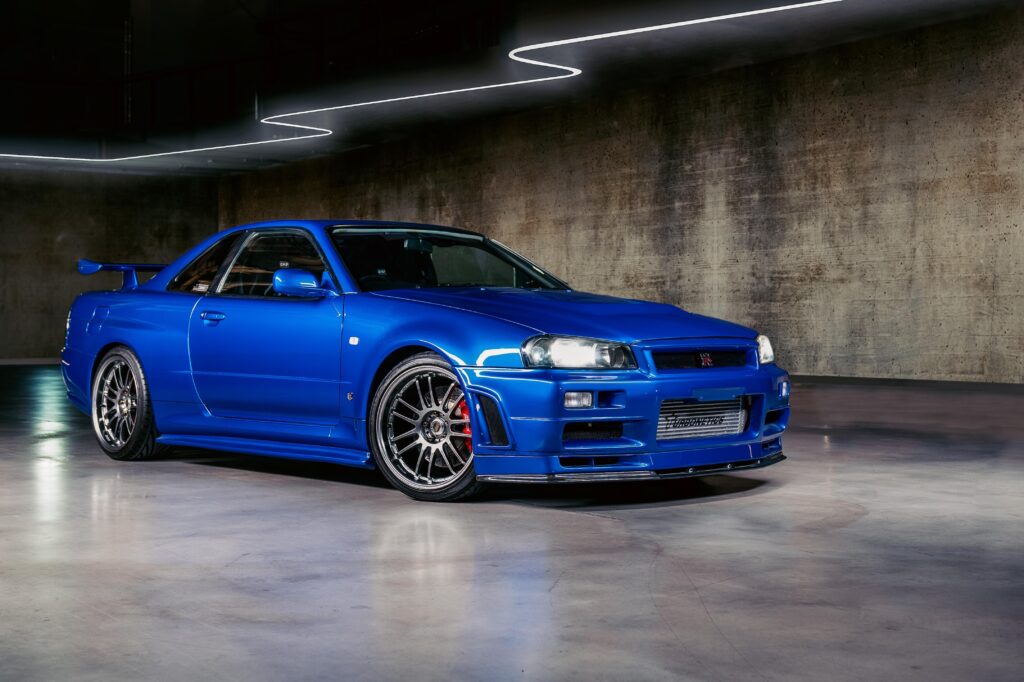
The Skyline’s front-end design plays a crucial role in its aerodynamic efficiency. From the aggressive nose to the sculpted fenders, every line is engineered to channel air smoothly around the vehicle. The GT-R’s front bumper and splitter work together to direct airflow beneath the car, reducing turbulence and preventing lift from forming under the chassis. This is particularly important when approaching high-speed corners, where even a slight loss of grip can compromise handling.
Air intakes on the front are another hallmark of Skyline engineering. These aren’t merely aesthetic; they serve to feed cool air into the intercoolers and engine bay while also aiding aerodynamic stability. By managing airflow precisely, the Skyline reduces air pressure in critical areas, effectively keeping the car glued to the track while cooling vital components simultaneously. It’s an elegant solution that blends performance with reliability.
Side Profile and Venting
While the front end often grabs attention, the Skyline’s side profile is equally crucial to its aerodynamic success. Smooth, flowing lines reduce drag, allowing the car to slice through air efficiently at speeds exceeding 180 miles per hour. Side skirts play a subtle yet significant role, guiding airflow along the car’s lower edges and preventing air from flowing underneath, which could lift the chassis and compromise stability.
Venting along the fenders and doors is another clever feature. These vents act as pressure release points, allowing trapped air to escape without creating turbulence. This not only enhances downforce but also ensures that high-speed stability remains consistent, particularly on long straights and sweeping corners. Every inch of the Skyline’s side profile is a testament to engineering precision and aerodynamic intelligence.

Rear Wing and Downforce Generation
Arguably the most iconic element of the Skyline’s racing persona is its rear wing. While many cars feature spoilers as an afterthought, the GT-R’s rear wing is a cornerstone of its downforce strategy. Mounted strategically to balance aerodynamic forces, the wing generates significant downward pressure at high speeds, increasing traction on the rear wheels. This allows drivers to accelerate out of corners with confidence, knowing the car will remain planted rather than fishtailing.
The effectiveness of the rear wing isn’t solely due to its size; its angle, shape, and integration with the rest of the car’s bodywork are meticulously engineered. Adjustable elements allow teams to fine-tune the balance between drag and downforce depending on track conditions. On tight circuits, more downforce ensures cornering stability, while on faster tracks, adjustments can reduce drag for higher top speeds. This adaptability is a key reason the Skyline remains competitive across diverse racing environments.
Diffusers and Underbody Engineering
While wings and spoilers capture the imagination, the true magic of the Skyline’s aerodynamics often lies beneath the car. The underbody is carefully sculpted to act as a diffuser, accelerating airflow and creating a low-pressure zone that sucks the car toward the ground. This ground effect, combined with the rear wing, produces a staggering amount of downforce without drastically increasing drag.
The Skyline’s flat underbody also serves a dual purpose: it smooths airflow to reduce turbulence and enhances cooling for critical components like the transmission and differential. In racing scenarios where every millisecond counts, this combination of speed, stability, and cooling efficiency can be the deciding factor between victory and defeat. It’s a perfect example of engineering where form meets function in the most practical and impactful way.
The Role of Computational Fluid Dynamics
Modern Skyline engineering owes much of its aerodynamic prowess to advanced computational tools. Nissan extensively uses computational fluid dynamics (CFD) to simulate airflow over every surface of the car, identifying areas where drag can be reduced and downforce increased. This virtual testing allows engineers to experiment with shapes, angles, and vent placements without costly track tests, accelerating innovation and fine-tuning performance.
CFD simulations have led to subtle but critical improvements, such as slight adjustments to the curvature of the hood, the angle of the rear wing, and even the placement of mirrors. These minor tweaks may seem insignificant, but in racing, a tenth of a second per lap can translate into several positions gained on the track. Nissan’s commitment to blending engineering with cutting-edge simulation technology ensures that the Skyline remains a benchmark in aerodynamic efficiency.
Real-World Performance Benefits
All this aerodynamic sophistication isn’t just theoretical; it translates directly into on-track performance. The combination of low drag, optimal downforce, and precise airflow management allows the Skyline to corner at higher speeds, brake later, and accelerate more efficiently than many of its competitors. Drivers report that the car feels incredibly planted, even in extreme conditions, providing confidence and control that are essential in competitive racing.
Additionally, the aerodynamic efficiency contributes to fuel economy during endurance races, where reduced drag allows the car to maintain high speeds without excessive fuel consumption. It’s a reminder that aerodynamics is not merely about speed—it’s about intelligent engineering that enhances overall performance, safety, and reliability.

Aerodynamics and the Skyline Legacy
The Nissan Skyline’s aerodynamic design has not only influenced its performance but also cemented its place in racing history. From the legendary R32 GT-R that dominated Group A racing to the modern R35 models competing in various motorsport series, aerodynamics has been a consistent differentiator. Engineers continue to push boundaries, incorporating lessons learned from decades of racing experience into every new iteration.
This legacy extends beyond the track as well. Car enthusiasts and tuners worldwide often adopt Skyline aerodynamic principles when modifying their vehicles, underscoring the influence of Nissan’s engineering philosophy. The GT-R isn’t just a car; it’s a living example of how thoughtful design and scientific precision can create a racing icon.
Conclusion
The Nissan Skyline’s dominance on the track is no accident. It’s the result of decades of meticulous engineering, where aerodynamics and downforce are central to every design decision. From the front splitter to the rear wing, from the side skirts to the underbody diffuser, every element is crafted to maximize stability, grip, and speed. Advanced simulation tools like CFD have further refined these features, ensuring that the Skyline remains competitive in modern racing.
In the world of high-performance racing, raw horsepower is only part of the equation. The Skyline demonstrates that aerodynamic intelligence can transform power into precision, allowing drivers to exploit every ounce of performance while maintaining control and confidence. For those who love speed, engineering, and the thrill of the track, the Nissan Skyline is more than a car—it’s a masterclass in aerodynamic dominance.
