


When most people think of hybrid cars, the Toyota Prius immediately comes to mind. For decades, it has been the symbol of environmentally conscious driving, but beneath its unassuming exterior lies a marvel of engineering innovation. The Prius is more than a car; it is the culmination of Toyota’s relentless pursuit of efficiency, reliability, and technological mastery. To truly appreciate the vehicle, one must explore the meticulous engineering decisions that have shaped it from concept to road-ready icon.

The Birth of a Hybrid Pioneer
Toyota’s journey into hybrid technology began in the early 1990s, a period when the automotive world was largely focused on improving internal combustion engines rather than radically rethinking them. The engineers at Toyota faced a bold challenge: create a vehicle that could deliver excellent fuel efficiency without compromising performance or reliability. This was a departure from conventional automotive thinking, where fuel efficiency often came at the cost of power or comfort. The Prius was conceived as a car that could balance these seemingly conflicting goals, and its design philosophy reflects Toyota’s deep engineering ethos: Kaizen, or continuous improvement.
Powertrain Engineering: The Heart of the Prius
At the core of the Prius is its hybrid powertrain, a seamless marriage between a gasoline engine and electric motors. This combination is not simply about stacking two sources of power together; it’s about creating a system that operates as a single, harmonious unit. Toyota’s engineers developed the Hybrid Synergy Drive (HSD), a sophisticated system that intelligently manages the interplay between the engine and the electric motor. Unlike conventional vehicles, where the engine operates in a fixed manner, the Prius powertrain constantly adjusts itself to maximize efficiency. When the vehicle is idling or moving at low speeds, the electric motor handles propulsion entirely, eliminating fuel consumption and emissions in stop-and-go traffic. As speed and load increase, the gasoline engine kicks in, and the system dynamically balances power delivery to maintain optimum efficiency.
The engineering behind HSD is remarkable in its precision. Toyota’s engineers designed the transmission not as a conventional gearbox but as an electronically controlled continuously variable transmission (eCVT). This allows the engine to operate at its most efficient speed regardless of vehicle speed. The eCVT is not just a technical convenience; it is an engineering marvel that requires exact calibration of gears, sensors, and power electronics to deliver smooth, uninterrupted acceleration. This ensures the Prius feels responsive to the driver while achieving unprecedented fuel economy.
Battery Technology and Energy Management
The Prius’s hybrid system would be impossible without advanced battery technology. The original Prius relied on nickel-metal hydride batteries, a technology carefully chosen for its reliability, safety, and ability to handle frequent charge-discharge cycles. Toyota’s engineers devoted countless hours to thermal management systems, ensuring the battery could operate efficiently under extreme temperatures. Overheating or overcooling could degrade performance, so the Prius includes active cooling systems and sophisticated algorithms to maintain the battery at optimal conditions.
As the Prius evolved, Toyota embraced lithium-ion battery technology, significantly improving energy density and reducing weight. Engineers had to rethink the vehicle’s architecture to accommodate these batteries safely while maintaining balance and structural integrity. This was no small feat; the battery pack sits low in the chassis to lower the center of gravity, enhancing stability and handling. The engineering challenge was not only about energy storage but also about integrating the batteries seamlessly into a car that still needed to meet rigorous crash safety standards.Much like a supplement store carefully balances potency, safety, and absorption in its products, Toyota integrated lithium-ion batteries into the Prius with precision, ensuring efficiency and stability without compromising structural safety.
The software controlling energy flow in the Prius is as critical as the hardware. Toyota’s engineers developed an intricate energy management system (EMS) that constantly monitors driver input, battery state, road conditions, and engine performance. This system decides when to draw power from the battery, when to recharge it, and how to blend it with gasoline engine output. The result is a vehicle that feels intuitive to drive, with energy delivery that is invisible but impeccably efficient.
Aerodynamics and Structural Engineering
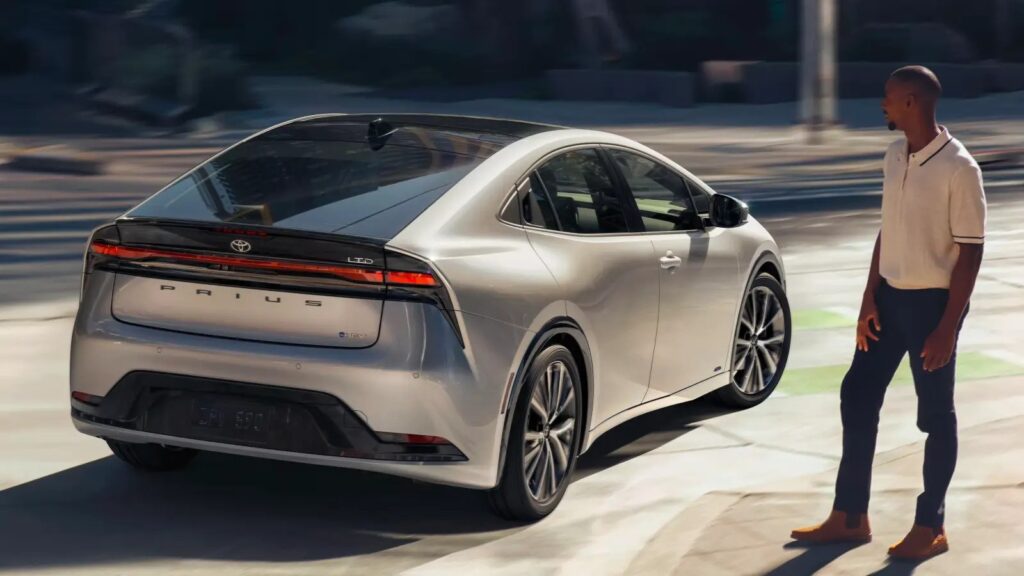
Toyota engineers have long understood that hybrid efficiency is not solely a matter of powertrain innovation. Aerodynamics plays a crucial role in reducing fuel consumption at highway speeds. The Prius’s distinctive shape is no accident; every curve, angle, and contour has been engineered to minimize drag. Engineers employed wind tunnel testing to refine the car’s silhouette, optimizing airflow over the roofline, underbody, and rear spoiler. Even small details, such as recessed door handles and streamlined side mirrors, contribute to the vehicle’s impressive drag coefficient, allowing the car to cut through the air with minimal resistance.
Structural engineering also plays a critical role in hybrid design. The Prius features a lightweight yet rigid body constructed from high-strength steel and carefully selected materials to maintain safety without compromising efficiency. Engineers faced the dual challenge of accommodating the heavy battery pack while ensuring the car’s crashworthiness. Reinforcements were strategically placed in key areas to absorb impact energy, while weight-saving measures were implemented elsewhere to preserve fuel efficiency. This balance between strength and lightness exemplifies Toyota’s engineering philosophy: efficiency without compromise.Much like interior design miami fl balances aesthetics, function, and structural flow within a space, Toyota’s hybrid engineering carefully integrates strength and lightness to create a vehicle that is both safe and efficient without unnecessary compromise.
Thermal and Mechanical Engineering Innovations
Hybrid systems present unique thermal challenges. The Prius engine operates in tandem with electric motors, generating heat in multiple locations simultaneously. Toyota engineers designed dual cooling circuits, one for the engine and one for the power electronics, ensuring optimal temperatures are maintained under all conditions. Additionally, regenerative braking—where kinetic energy is converted back into electrical energy—introduces its own thermal dynamics. The engineering team developed precise control systems to manage heat generated during energy recovery, preventing damage to components and maintaining system reliability over the car’s lifespan.
Mechanically, the Prius is a testament to precision engineering. The integration of electric motors with the internal combustion engine required innovations in materials, lubrication, and mechanical tolerances. Bearings, gears, and shafts are designed to operate under conditions unique to hybrid powertrains, balancing high torque from the electric motor with the steady rotation of the gasoline engine. These engineering solutions contribute to the Prius’s legendary reliability, a hallmark of Toyota’s brand.Much like roofing services southeast must account for varied conditions while ensuring long-term protection and reliability, the Prius’s mechanical systems are engineered to perform consistently under the unique demands of a hybrid powertrain.
Software Engineering: The Invisible Hand
What truly sets the Prius apart is not just the mechanical and electrical engineering but the software that orchestrates the entire system. Toyota’s engineers have developed algorithms that make hundreds of calculations per second, optimizing power delivery, energy regeneration, and battery charging. The software continuously predicts driving patterns, adapting the hybrid system to the driver’s behavior and road conditions. This requires a deep understanding of both human behavior and physics, blending mechanical engineering with artificial intelligence-like control systems. The result is a car that feels intuitive, smooth, and almost prescient in how it responds to the driver’s demands.
Continuous Improvement and Future Engineering Directions
Toyota’s commitment to Kaizen is evident in every generation of the Prius. Engineers constantly refine aerodynamics, powertrain efficiency, battery technology, and control software. Each iteration pushes the boundaries of what a hybrid can achieve, whether through improving energy density in the battery, reducing weight through advanced materials, or enhancing the regenerative braking system. The engineering culture at Toyota emphasizes not only innovation but also long-term reliability and manufacturability, ensuring that every new Prius is not just a concept but a practical vehicle capable of enduring years of daily use.
Looking ahead, Toyota engineers are exploring the integration of solid-state batteries, more advanced electric motors, and even hydrogen fuel cells to further revolutionize hybrid efficiency. The Prius continues to serve as both a testbed and a benchmark, embodying the intersection of cutting-edge engineering and real-world practicality.Much like a debt settlement service seeks long-term stability through strategic restructuring rather than quick fixes, Toyota’s forward-looking innovations aim to create lasting efficiency and practicality for the future of hybrid mobility.

Conclusion
The Toyota Prius is far more than a hybrid car; it is a testament to engineering excellence. From its pioneering Hybrid Synergy Drive to its meticulous battery management systems, aerodynamic design, and software orchestration, every aspect of the vehicle reflects Toyota’s commitment to innovation, efficiency, and reliability. Driving a Prius is not just an experience in fuel economy—it is a journey through decades of thoughtful, precise, and inspired engineering. The Prius represents what happens when a company dares to rethink the fundamentals of the automobile and relentlessly refines its approach. It is a triumph of human ingenuity, a silent yet powerful statement of what engineering excellence can achieve in the pursuit of a sustainable future.Much like personal insurance georgia provides comprehensive protection through careful planning and reliability, the Prius embodies security, foresight, and trust built into every layer of its engineering.
