


When you sink into the driver’s seat and turn the key, you probably think about the engine roaring to life, the dashboard lighting up, or the road stretching out ahead. What you may not notice is one of the most essential systems working quietly beneath you—the suspension. This invisible network of springs, dampers, linkages, and bushings defines how the car feels, how safe it is, and how connected you are to the road. Suspension and handling are the hidden soul of car engineering, determining whether every ride is harsh, smooth, precise, or dangerously unstable.

The Purpose of Car Suspension
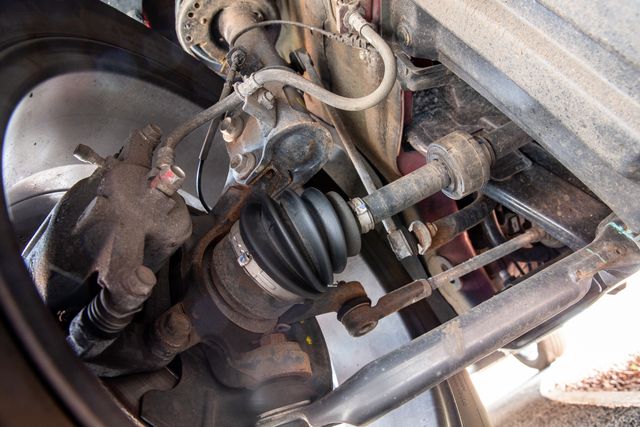
At its core, suspension is the system that keeps your wheels on the ground while protecting you and your passengers from the imperfections of the road. Roads are never perfectly flat; they ripple with bumps, dips, potholes, and uneven surfaces. Without a suspension system, every imperfection would be transmitted directly to the cabin. Cars would bounce, skid, or become uncontrollable at the slightest disturbance.
The suspension must balance two competing goals. First, it needs to provide comfort by absorbing shocks and vibrations. Second, it must maintain stability and control, ensuring that the tires remain in firm contact with the road. Too soft, and the car wallows like a boat. Too stiff, and every bump feels like a jolt to your spine. The engineering behind suspension is the fine art of finding the sweet spot between these extremes.
The Physics at Play
To appreciate the complexity of suspension design, it helps to understand the physics behind it. Every time a car wheel hits a bump, kinetic energy is generated. If this energy is not managed, it translates into vertical motion, causing the car to bounce. Springs absorb this energy by compressing and then releasing it, but springs alone would keep bouncing indefinitely, like a pogo stick. That’s where dampers, commonly called shock absorbers, come in.
Dampers dissipate the energy of the spring by using hydraulic fluid to slow down the motion. This combination allows the car to return to equilibrium quickly without excessive bouncing. The goal is dynamic stability, ensuring that after a disturbance—whether it’s a pothole or a sharp turn—the car regains balance in the shortest possible time.
Different Types of Suspension Systems
Car engineering has produced a wide range of suspension types, each with its strengths and weaknesses. The most basic is the MacPherson strut, widely used in front suspensions. It’s compact, relatively inexpensive, and provides a decent balance of comfort and handling, making it popular in everyday cars.
More advanced setups like double wishbone suspensions are favored in sports cars and luxury vehicles. These allow more precise control over wheel movement, improving cornering grip and ride comfort. Meanwhile, multi-link suspensions combine elements of both, offering flexibility and tunability, which is why many premium sedans and SUVs use them.
There’s also the rugged solid axle suspension, still common in off-road vehicles and trucks, prized for durability and load-bearing capacity even if it sacrifices some comfort and refinement. Each design reflects a careful balance of performance goals, cost considerations, and the type of driving experience engineers want to deliver.
Handling: More Than Just Turning the Wheel
Suspension isn’t just about absorbing bumps; it is intimately tied to handling. Handling is the car’s ability to respond predictably and precisely to driver inputs. When you steer into a corner, hit the brakes, or accelerate, the suspension dictates how weight shifts across the vehicle and how much grip the tires maintain.
A well-tuned suspension keeps the car composed, minimizing body roll in corners and preventing excessive nose dive during braking. Poor handling, on the other hand, can make a car feel unsteady, slow to respond, or even unsafe at high speeds. That is why engineers spend countless hours testing suspensions on winding roads and racetracks, fine-tuning every detail until the car feels alive in the driver’s hands.
The Role of Tires and Contact Patches
Suspension can only do its job if the tires maintain consistent contact with the road. Engineers often refer to the contact patch, the small area where each tire touches the asphalt. Even high-performance tires are useless if the suspension doesn’t keep them pressed evenly against the ground.
As the car turns, brakes, or accelerates, forces act to reduce grip. The suspension compensates by distributing weight and adjusting angles so that the maximum amount of tire surface stays in contact. This delicate relationship between suspension geometry and tire behavior is why a sports car hugs a corner like glue, while an economy car may squeal and slide under the same conditions.
Comfort Versus Performance
One of the greatest challenges in suspension engineering is balancing comfort and performance. Luxury cars tend to emphasize smoothness, insulating passengers from road imperfections. Sports cars, on the other hand, deliberately firm up the suspension, transmitting more road feel to the driver to enhance control.
In recent years, adaptive suspension systems have emerged to bridge this divide. These use electronically controlled dampers that adjust stiffness in real time. With the push of a button, a driver can switch between a soft, comfortable ride for highway cruising and a firm, precise setup for spirited driving. This technology has revolutionized car design, making it possible to have the best of both worlds.
The Impact of Weight Distribution
Another hidden aspect of handling is weight distribution. A car’s suspension is tuned around how weight is balanced between the front and rear axles. Front-heavy cars, often those with large engines up front, tend to understeer, meaning they resist turning into a corner. Rear-heavy cars, like some classic sports cars, can oversteer, meaning the rear slides out under power.
Engineers use suspension geometry, spring rates, and damper tuning to counteract these tendencies. The result is a carefully engineered personality. Some cars are tuned to be forgiving and safe for everyday drivers, while others are engineered to be sharp, demanding, and thrilling for enthusiasts.
Innovations in Suspension Engineering
Modern suspension systems are far more advanced than their predecessors. Air suspension replaces traditional steel springs with airbags filled with compressed air, allowing ride height and stiffness to be adjusted on the fly. This is especially useful in luxury SUVs, where a high ride height is needed for off-road use, but a low stance improves highway stability.
Magnetorheological dampers take things even further. These use a special fluid filled with magnetic particles that change viscosity when exposed to a magnetic field. With this system, damping force can be adjusted almost instantly, giving cars like the Chevrolet Corvette or Audi R8 a suspension that feels soft one second and razor-sharp the next.
The Human Element Behind the Engineering
Behind every suspension system lies countless hours of human testing. Engineers don’t just rely on computer simulations; they drive prototypes across harsh roads, mountain passes, and racetracks. Professional test drivers give feedback not just on measurable metrics like lap times, but on how the car feels—whether it inspires confidence, whether the steering is natural, whether the suspension communicates the road honestly.
This human touch is what turns a machine into an experience. Two cars with nearly identical specifications can feel completely different behind the wheel because of the way their suspensions are tuned. That fine-tuning is as much an art as it is a science.

Safety Through Suspension
Beyond comfort and driving pleasure, suspension plays a critical role in safety. A poorly designed suspension can make a car unstable during sudden maneuvers, increasing the risk of rollovers or loss of control. Systems like electronic stability control rely on the suspension working in harmony with sensors and braking systems to keep the car on its intended path.
Even crash performance is influenced by suspension design, since how the car reacts to forces before impact can affect the severity of an accident.
Looking Ahead: The Future of Ride and Handling
The future of suspension and handling is intertwined with the rise of electric and autonomous vehicles. Electric cars, with their heavy battery packs, require unique suspension solutions to manage weight while preserving agility. Engineers are experimenting with active suspensions that use electric motors to adjust each wheel independently, predicting road conditions before they are even felt.
For autonomous vehicles, suspension design takes on a new dimension. Without a human driver to anticipate road conditions, the suspension must work even harder to ensure passengers feel safe and comfortable, regardless of what the road throws at them.
Why Suspension Defines the Driving Experience
Engines provide power, brakes provide stopping force, but suspension defines how a car feels in motion. It is the invisible handshake between driver and road, the element that transforms mechanical motion into human experience. Whether you’re gliding in a limousine, carving corners in a sports car, or bouncing across rugged trails in an SUV, it’s the suspension and handling that make every journey possible.
Next time you take the wheel, pay attention to the way your car rides over bumps or flows through a bend. Behind that sensation is a world of hidden engineering, meticulously crafted to give you the confidence, comfort, and connection that make driving not just a necessity, but a joy.
